


“He Has a Bigger Fish to Fry”: Why One Analyst Saw a Narrow Window for Warsh to Hike — and What Actually Happened
“He Has a Bigger Fish to Fry”: Why One Analyst Saw a Narrow Window for Warsh to Hike — and What Actually Happened
AJ Tiarsmith Sun, September 6, 2026 at 7:00 AM UTC
0
White HouseQuick Read -
Dutta argues the Fed should hike now while one clean inflation print remains, before rising oil prices and tariff risks push data higher.
Dutta says Warsh can secure committee consensus in July but may lose it by September as hawks Hammack and Logan grow more dominant.
Consumer sentiment has collapsed to 44.8 and the personal savings rate has dropped to 3.9%, masking household weakness beneath AI-driven growth.
Just released. Our analysts combed the entire stock market and named the ten best stocks to buy right now. The report is free. Enter your email and see if any of your stocks made the cut.
Neel Dutta of Renaissance Macro Research argued on Bloomberg that the Federal Reserve should hike rates at its July meeting. His case blended hawkish tactics with a dovish read on the underlying economy. The Fed ultimately held, but the vote was the most fractured the committee had produced in nearly a decade.
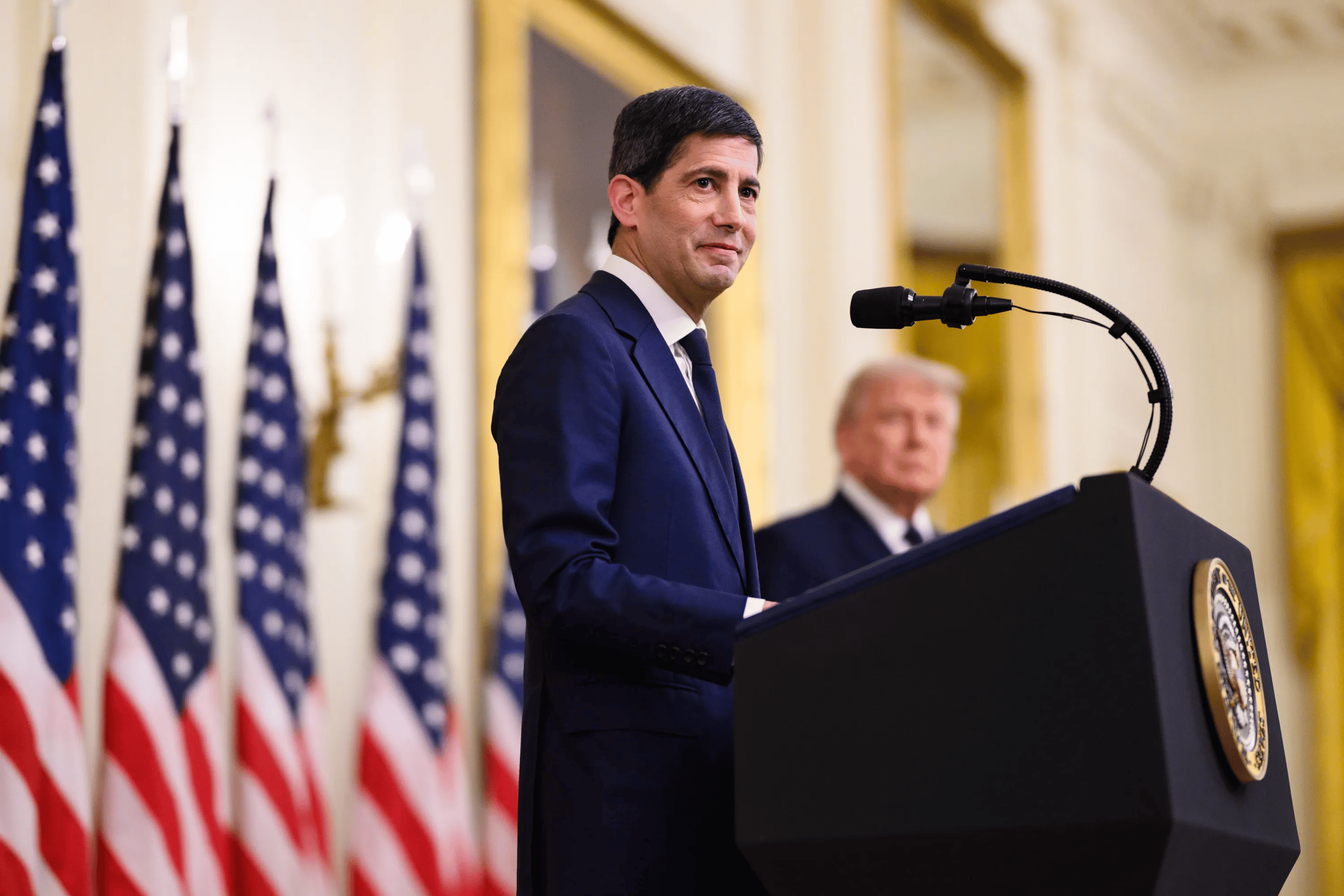
Kevin Warsh and the FOMC held the target rate at 3.75% since December 10, 2025, following 75 basis points of cuts from the 4.5% peak in September 2025. A rate hike would have marked a decisive reversal, and Dutta thought the chairman had a narrow window to act on his own terms before politics and a fracturing committee stripped that choice away.
The Tactical Case: Hike While the Window Is Open
Dutta's argument rested on the shape of coming inflation prints. "If you have one good month of inflation data, but you know the next two months will be bad, you might as well just do it now," he said.
Free Report, Just Released
The Top 10 Stocks To Buy Now
24/7 Wall St has helped investors make money for over two decades, and our top analysts just finished ranking the definitive Top 10 Stocks To Buy Now. Not the ten biggest companies. Not the ten everyone is arguing about. The ten best stocks to buy right now.
The report is free, and you can see why we think each stock is a top investment today.
Enter Your Email and See the Ten →
The setup Dutta described was real and observable. Oil prices were expected to rise into August despite near-term declines, hyperscaler capital spending continued to accelerate as AI-related demand pressed higher, and the president's approach to tariffs remained a persistent source of inflation risk. WTI crude, which sat at $84 per barrel heading into the July meeting, has since climbed to around $91 per barrel in early September 2026, driven by US-Iran tensions and disruptions to tanker traffic through the Strait of Hormuz. Core PCE, the Fed's preferred inflation gauge, had climbed every month over the prior year, reaching 130.08 in May 2026.
The 10-year Treasury yield stood at 4.71% just before the July meeting. It has since pushed to around 4.78% as of early September 2026, and the 30-year Treasury hit 5.19% on the day of the decision itself, its highest level since 2007. Historical context is available on the FRED 10-Year Treasury series.
Committee Control and the "Bigger Fish to Fry" Angle
Beyond inflation math, Dutta framed the July decision as a test of leadership. "If you're Kevin Warsh, I think it's important to go hike when you can and maintain some modicum of control over the committee than to hike when you must," he said, adding that "He could probably get the committee to get on board for a hold in July. By September, he may not be so fortunate."
Advertisement
He identified the committee split as fragile, and events bore that out. Three regional bank presidents dissented in favor of a quarter-point increase at the July 29 meeting: Beth Hammack of the Cleveland Fed, Neel Kashkari of the Minneapolis Fed, and Lorie Logan of the Dallas Fed. It was the most unified hawkish dissent the FOMC had produced since September 2016. No members of the Board of Governors joined the dissent, but the FOMC minutes later noted that the hawkish sentiment extended well beyond the three who formally voted against the hold.
The political dimension Dutta flagged proved accurate in spirit. "I could see a scenario where Warsh hikes, and because Trump has a much bigger fish to fry at the moment, he kind of gives them a pass. By September, October, when you're much closer to the midterms, maybe he won't feel as forgiving," Dutta said. Warsh held rather than hiked, but the political math has only grown more complicated since.
A Bifurcated Economy
Dutta framed the whole argument as a tactical case rather than a bullish call. "I see a relatively uneven economy that's being sort of held up by one area," he said. AI-related capital expenditure was doing the heavy lifting while residential investment and non-AI construction spending remained sluggish, with consumer spending weak as Q3 began.
BEA data backed the bifurcation. Information sector value added grew 1.5% in Q1 2026, while construction managed just 1.0% and real estate 1.1%. The household picture looked stretched: the personal savings rate had slid from 6.2% in Q1 2024 to 3.9% in Q1 2026, and University of Michigan consumer sentiment was sitting at 44.8, approaching recessionary territory. Since the July decision, nonfarm payrolls fell in July and core inflation came in subdued, complicating the case for an imminent September hike and giving the majority of the committee reason to hold again.
What Happened Next
The Fed voted 9-3 to hold on July 29, 2026, exactly as Dutta suggested was the path of least resistance. Equities sold off on the news, with the Dow Jones Industrial Average falling more than 840 points on the day. The three-way hawkish dissent pushed market odds of a September hike past 57% immediately after the decision, though those odds have since retreated as softer payroll and inflation data arrived.
Goldman Sachs, which had earlier been forecasting additional rate cuts in 2026, revised its call after the July meeting and now expects the Fed to hold at 3.50%–3.75% for the remainder of the year, with any easing pushed to 2027. Chief economist Jan Hatzius argued that following two months of softer jobs and inflation data, the case for near-term tightening has weakened considerably. Markets are currently pricing around a 50% chance of a September hike, down from roughly 70% earlier, as Fed Governor Christopher Waller signaled openness to remaining on hold if inflation continues to ease.
Dutta's central prediction — that July would be the cleaner moment to hike and that the September meeting would carry more political and economic uncertainty — has proven structurally correct, even if Warsh chose to hold in July. The September 15-16 meeting will now serve as the proving ground for whether the window Dutta described has genuinely closed or merely shifted.
Editor's note: This article has been to reflect the July 29, 2026 FOMC decision, in which the Fed held rates 9-3 with Hammack, Kashkari, and Lorie Logan as the dissenting hawks. The Goldman Sachs rate outlook has been revised from a forecast of further cuts to 3–3.25% to a hold at 3.50%–3.75% through 2026 with cuts deferred to 2027. WTI crude oil and the 10-year Treasury yield figures have been refreshed to early September 2026 levels, and post-July payroll and inflation data softness has been incorporated.
Got $1,000? Read This Before You Buy Another Stock
If you have cash sitting in your account right now, give this two minutes. After more than two decades of helping investors beat the market, our top analysts at 24/7 Wall St. put together a definitive report on the Top 10 Stocks To Buy Today.
They combed the entire market. It's not 10 ideas, not 10 stocks everyone is talking about, it's what their research points to as the 10 best stocks to buy right now, and it's free. Read more here and see which stocks made the list -->>
Contact editorial@247wallst.com for any questions or corrections.
Source: “AOL Money”
