


How George Martin and Paul McCartney Broke the Rules to Create the Beatles’ ‘Yesterday’ (Exclusive)
How George Martin and Paul McCartney Broke the Rules to Create the Beatles’ ‘Yesterday’ (Exclusive)

Jordan RuntaghFri, September 4, 2026 at 10:25 PM UTC
0
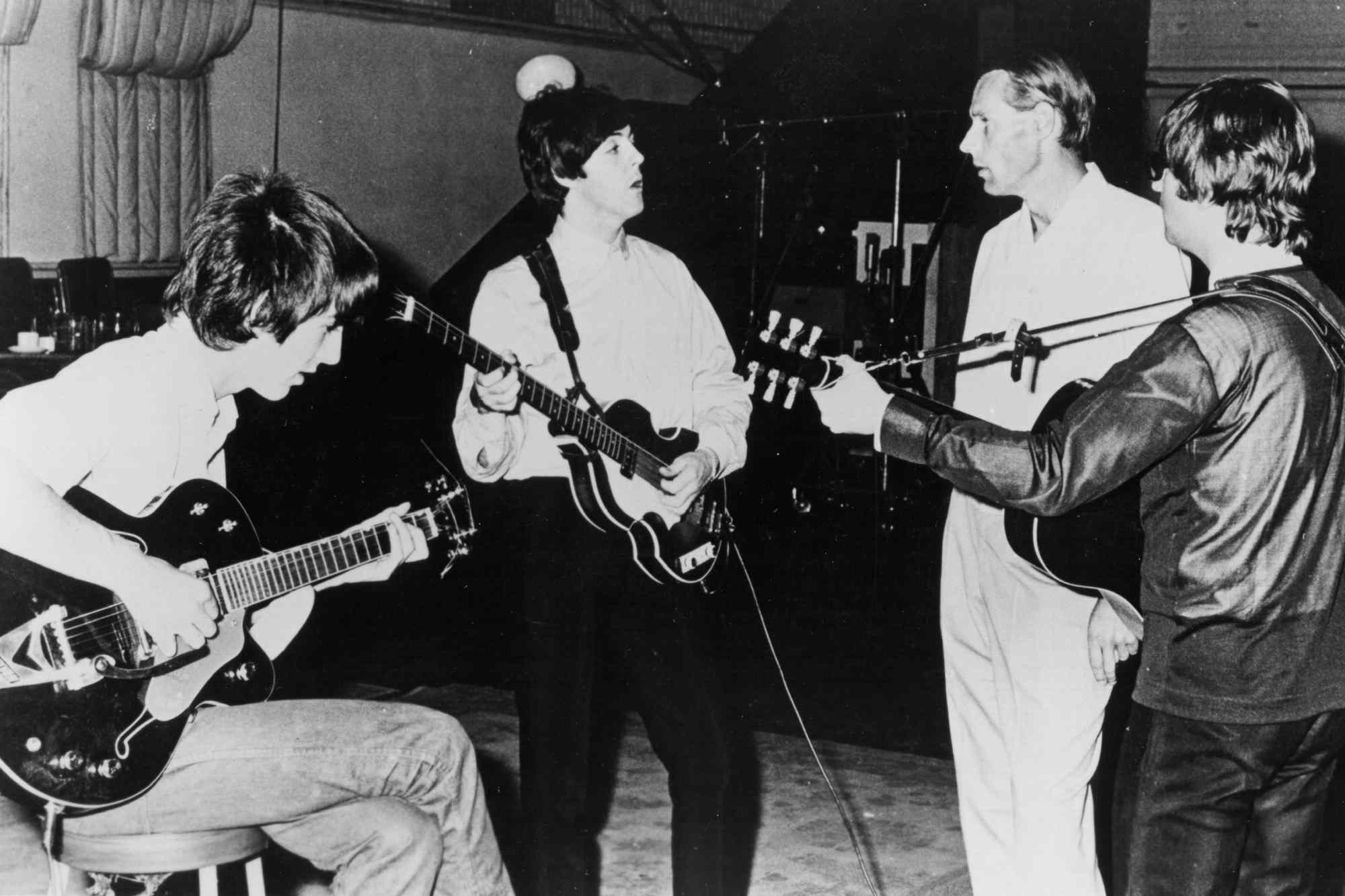
The Beatles and George Martin in the studio in 1964Credit: Michael Ochs Archives/Getty -
George Martin’s orchestral arrangement for “Yesterday” marked a turning point in the Beatles’ creative process
The collaboration introduced classical instrumentation to rock music, paving the way for future innovations in pop
A new book, George Martin: The Scores, compiles Martin’s handwritten Beatles arrangements for the first time
If you can’t read music, you’d be forgiven for thinking there’s not much to glean from an orchestral score. But look closely, and those pages can tell deeper stories about the music and the people who made it.
That’s why George Martin: The Scores is such a delight for Beatles fans. More than a collection of musical manuscripts, it offers a window into the creative process — preserving the crossings-out, marginal notes and flashes of improvisation that reveal how some of the most beloved recordings in history actually took shape.
The three-volume set includes dozens of original handwritten arrangements by the Fabs’ producer, Sir George Martin: the man who signed the Beatles in 1962 and harnessed their untrained musical potential. It’s the first time scores for classics like “A Day in the Life,” “Strawberry Fields Forever,” “Something” and “Eleanor Rigby” have been compiled — or, in many cases, seen publicly. Published by Curvebender in honor of Martin’s centenary, the book features a new foreword written by another knight of the turntable, Sir Paul McCartney.
“It was an idea I came up with before he died to keep him occupied,” his son Giles Martin, the producer who has overseen the recent slate of expansive Beatles archival box sets, tells PEOPLE. “My dad was a man that needed things to do — I had to keep him off the streets! The scores are really lovely to look at. They really are like beautiful pieces of art.”
Sir George was deeply involved in the process prior to his death in 2016, although he had some initial reservations. “Do you really think people will find it interesting?” he wondered. “It isn’t exactly Beethoven, is it?”
As a staff producer in the ‘60s, Martin’s schedule was crowded with sessions for numerous artists in addition to the Beatles. Often he had to fit his arranging into whatever scraps of free time remained. Some scores were completed only a day or two before the tracking date, hastily jotted in pencil as the deadline loomed. To him, they weren’t history but merely a hard day’s work.
Although Martin saved the scores, he certainly wasn’t precious about them. Brian Kehew and K.L. Ryan, who assembled the collection for Curvebender and wrote the accompanying text, assumed the historic manuscripts would be kept behind museum glass or locked away in a vault. Instead, when they visited Martin’s home in the fall of 2014, they found them tucked into an unlocked wooden chest and scattered among cupboards and shelves. His humility sometimes bordered on charming carelessness, as Kehew and Ryan learned when they watched him use the original manuscript for “Here Comes the Sun” as a coaster for his teacup — apparently more concerned with protecting his bare wooden table than the priceless sheet of music.
But the value of these documents isn’t merely that they survived. Taken closely, they preserve the moment-to-moment negotiations that helped shape the recordings themselves. One of the earliest examples captures a turning point in Martin’s relationship with the Beatles — and in popular music.
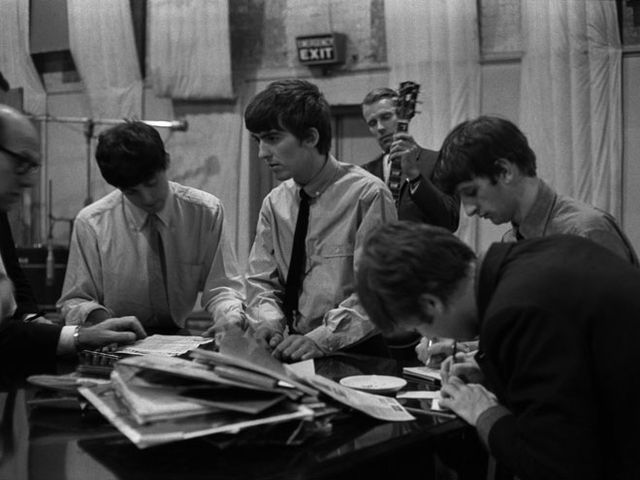
George Martin with the Beatles at EMI Recording studios in 1964.Credit: Terry O'Neill/Getty Images
Martin’s tenure as the Beatles’ orchestral arranger began in the summer of 1965 during sessions for “Yesterday,” a song that famously started with a dream. McCartney awoke one morning earlier that year with a tune in his head, which he groggily pounded out on a bedside piano. It arrived so fully formed that McCartney assumed the song must already exist, and spent months playing it for friends to ensure he hadn’t unknowingly borrowed from an old standard.
“Paul came to me, and he said, ‘Have you heard this before?’” Martin recalled, according to The Scores. “I said, ‘No, it’s pretty good.’ And he said, ‘You’re sure you haven’t? It may be somebody else’s.’ He was worried that he’d heard it and pinched it from somebody.”
The melody came deceptively easy, but everything else would prove difficult. The lyrics coalesced slowly, with McCartney filling the incomplete sections with nonsense phrases. For months, he tortured his bandmates and producer by singing “Scrambled eggs — oh, my baby, how I love your legs…”
The more familiar opening lines were in place by June 14, 1965. The Beatles were unusually productive at London’s EMI Studios that day, even by their own impressive standards, completing the folky “I’ve Just Seen a Face” and Little Richard-styled shouter “I’m Down” in just three hours that afternoon. When they returned from their dinner break, McCartney decided to finally tackle his long-gestating song, which he’d christened “Yesterday.”
As Martin remembered, “I said, ‘When recording this, the best thing is for you just to sing it playing the guitar, and we’ll decide what to put on it [afterwards].’” McCartney followed his advice, recording two takes of “Yesterday” with only his voice and Epiphone Texan acoustic guitar.
At first, there was no intention of making it a solo performance. The original plan was for the rest of the Beatles to contribute, but during the three-and-a-half-hour session, the group struggled to find parts that improved upon McCartney’s spare arrangement. Every attempted addition seemed to disturb the intimacy that had made it work in the first place. “The other guys in the group felt that they could not add anything to the performance,” McCartney recalls in the book, “so [they] were happy to leave any decisions to George [Martin] and myself.”
The impasse prompted Martin to look beyond the Beatles’ usual instrumental palette. “I said, ‘You know, the only thing I could think of adding to it, honestly, is strings.’”
McCartney balked, fearing that his creation would be ruined with violin swells that would render it, in a word, corny. Martin insisted that it could be done without schmaltz, but the singer was wary of wrecking their reputation with classical pretensions. “‘We can’t do that — we’re a Rock and Roll group,’” McCartney remembers saying at the time. It was only after assurances that the strings could be erased from the recording that he finally relented.
Advertisement
The following day, McCartney went to Martin’s home, where the two spent the afternoon mapping out the string arrangement over tea and manuscript paper. “I played it to him: ‘These are my chords,’” McCartney remembered, as Martin showed him how Bach might spread those notes across cello, viola and two violins. “It was nice, I was getting lessons.”
Wanting to leave a trace of his own musical fingerprint amid all that classical formality, McCartney insisted on an unorthodox bluesy note in the cello line that Martin warned wasn’t in keeping with the baroque style. (Just after the line “She wouldn’t say” in the final recording.) “I needed something of mine again to redress the balance,” he would explain. Martin appreciated the minor rebellion, later admitting, “I wish I’d thought of [it].”
This collaboration marked the beginning of a new role for Martin: not merely the man behind the console, but a musical co-conspirator. It was a partnership that The Scores documents again and again, with Martin translating ideas that lay beyond the vocabulary of a four-piece rock band, while McCartney — and, increasingly, the other Beatles — pushed him toward sounds that defied the conventions he’d been trained to observe.
“George was very good at breaking the rules of music,” McCartney would reflect years later. “He couldn’t have produced the Beatles if he hadn’t been willing to do those things.”
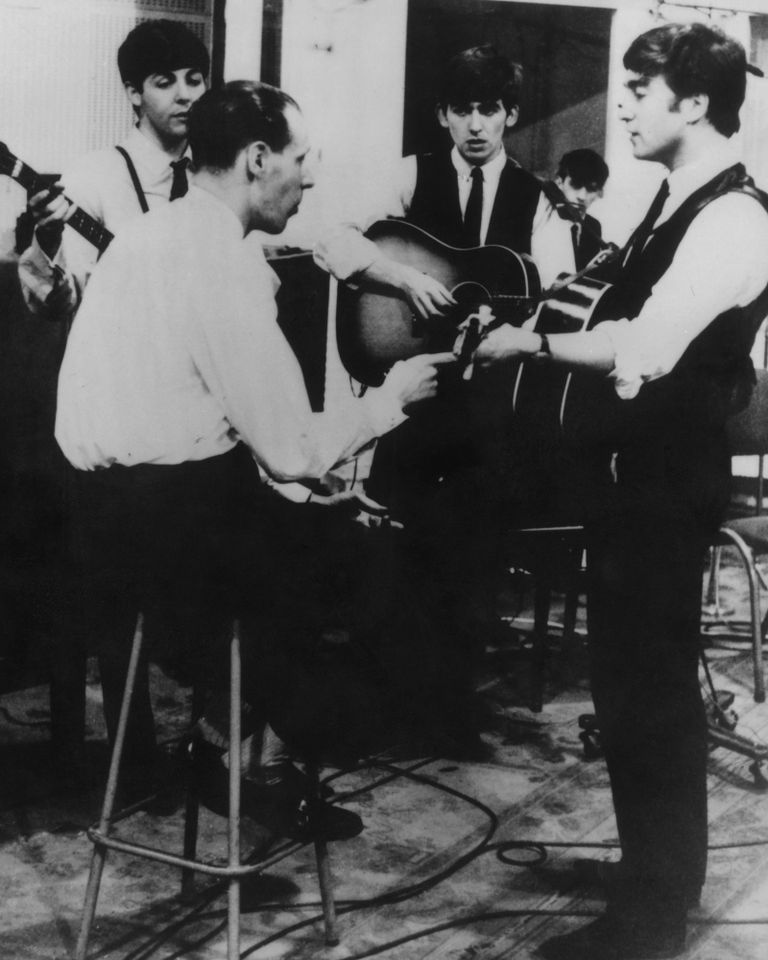
The Beatles at a recording session for with their producer George Martin, circa 1963.Credit: Keystone/Hulton Archive/Getty
The “Yesterday” session marked another turning point for the Beatles. It was the first time that outside musicians — other than Martin himself — were employed to augment one of their recordings. Rather than simply documenting the sound the four Beatles could make together, the studio could now become a place where additional players and unfamiliar instruments helped realize ideas that the band could not produce with guitars, bass and drums alone.
Whatever doubts McCartney still harbored disappeared when the four musicians began to play along with the tape of his acoustic solo performance. “It was goose-pimple time,” he recalled. “When I heard the strings working on it, I thought, ‘Oh, gosh, this is going to work.’”
Over 60 years later, it’s hard to comprehend just how radical the combination sounded. Classical instrumentation has since become commonplace in pop, but in 1965 the combination of solo acoustic guitar and string quartet sounded startlingly unlike anything expected from a rock band.
Sure, there had been ballads with strings (see: “Ferry Cross the Mersey” by the Beatles’ own Liverpool mates Gerry and the Pacemakers, which was also produced and scored by Martin) but “Yesterday” daringly placed the quartet at the center of the arrangement, treating it less as decoration than as an equal to McCartney’s voice and guitar.
“We certainly had never done anything like it before,” Martin reflected, “and no one else had either.”
“Yesterday” went on to become the most recorded composition in music history, with upwards of 2,200 cover versions. More importantly, it challenged millions to broaden their listening habits — and pointed the way towards the innovations and experiments that were to come for the Beatles and all they would inspire.
For Martin, “Yesterday” was the first of many scores that allowed the band to venture into musical territory they could imagine but could not necessarily reach on their own. Yet he remained characteristically modest about the achievement. “I did it in an afternoon,” he admitted. “It’s very, very simple writing, but it couldn’t be anything else. If it were, it would destroy what the point of the song is, which is utter simplicity.”
Nevertheless, he understood that something important had happened. It’s telling that Martin kept the handwritten score. It survives as one of the earliest pieces in his personal archive. His later Beatles manuscripts were generally cleaner, suggesting that he had begun preserving his original scores with an eye toward their possible significance.
This ragged, unassuming document exists from the moment he first began to recognize that they were making history — together. It even contains a playful acknowledgement of the partnership from McCartney, who amended the customary Lennon-McCartney credit by scrawling “and George Martin and Mozart.” Not exactly Beethoven, but…
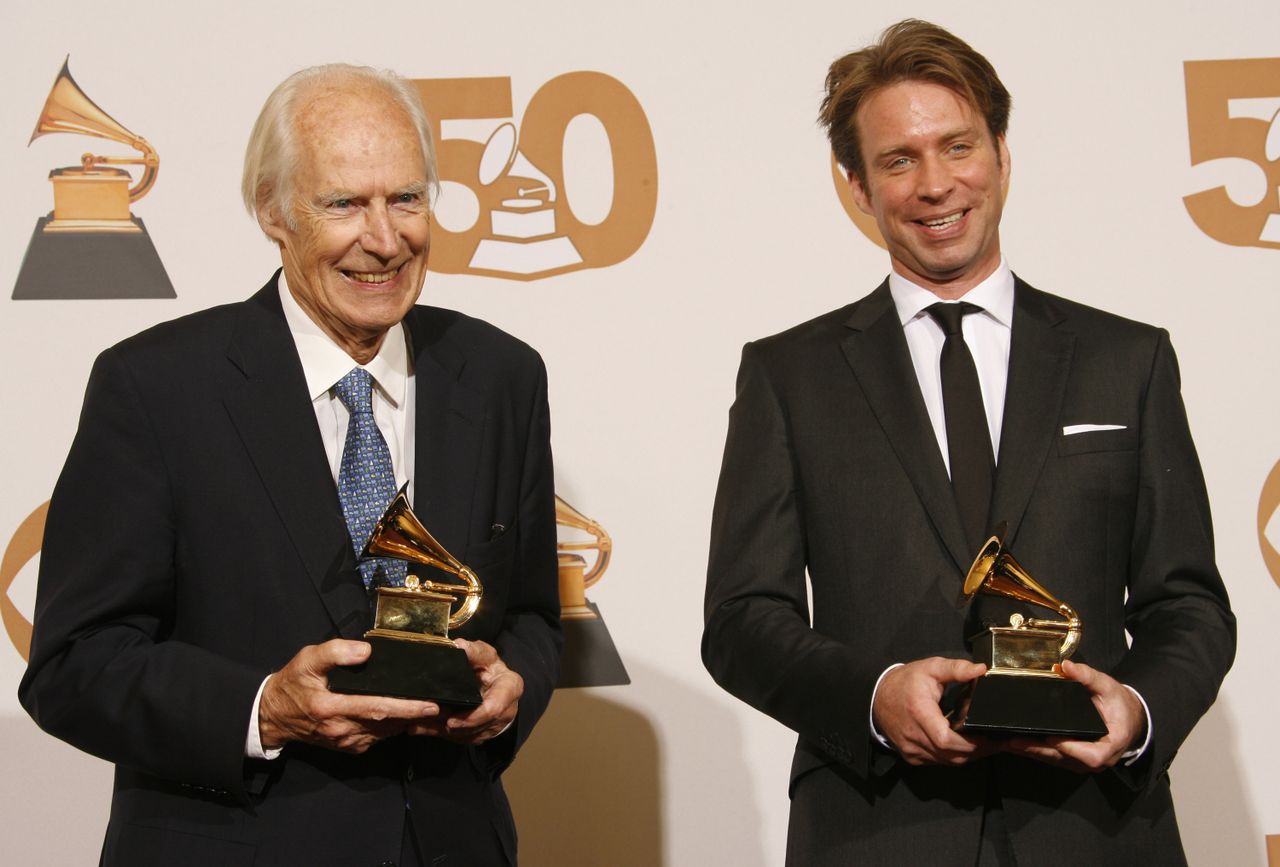
Beatles producer Sir George Martin and producer Giles Martin with the Grammy Award for ‘Love’ in 2008. (Photo by Dan MacMedan/WireImage)Credit: Getty Images
In the end, Giles notes, assembling George Martin: The Scores took longer than the Beatles’ entire career. It’s an irony that adds weight to its completion. To see his father’s musical legacy finally gathered in one place is, for him, both bittersweet and deeply satisfying. “I’m so pleased we did this. He would’ve loved it,” he says. “It’s a pity he can’t see it, but it’s better than if we didn’t make it. It’s a really lovely thing.”
George Martin: The Scoresis out now.
on People
Source: “AOL Entertainment”
